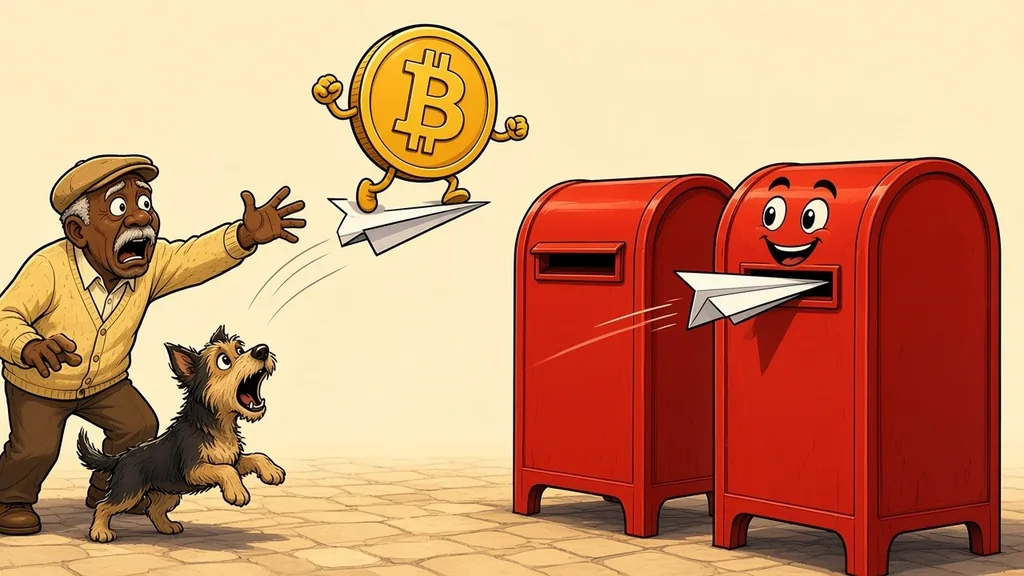
Short answer: once a crypto transfer confirms on the blockchain it cannot be reversed. No bank, exchange or support desk can pull it back. Whether you get it back depends on one thing: who controls the address it landed in.
Some mistakes can be fixed and some cannot. This guide shows which is which and what to do in the next hour.
What happens if you send crypto to the wrong address?
The coins move to that address and stay there. A blockchain has no undo button and no central party with the power to reverse a payment. Ledger's support page puts it plainly: cryptocurrency transactions are irreversible and the only option is to contact the owner if you know who it is.
Here are the most common cases and your real odds.
| What went wrong | Can you get it back? | What to do |
|---|---|---|
| Transaction still pending | Often yes | Speed up or replace it in your wallet if it supports that |
| Sent to a person you know | Yes if they agree | Ask them to send it back |
| Wrong network to an exchange | Sometimes | Open a ticket with the receiving exchange |
| Missing memo or tag on a deposit | Usually yes | Contact the exchange with your transaction ID |
| Unsupported token sent to an exchange | Sometimes, for a fee | Use the exchange's recovery process |
| Your own other wallet or account | Yes | Add that network or account in your wallet |
| A stranger's address | Rarely | Ask politely if the owner is identifiable. Otherwise treat it as lost |
| A scammer's look-alike address | Almost never | Report it to the FBI's IC3 and your exchange right away |
Step 1: check whether it has confirmed
Open the transaction in your wallet history or paste its ID into a block explorer. If it still shows pending, act fast. MetaMask's help center says an unconfirmed transaction can be sped up or canceled while it is still pending. Many Bitcoin wallets offer a similar replace-by-fee option for unconfirmed payments. Once it shows confirmed or success the transfer is final.
Step 2: figure out who controls the address
Look up the receiving address on a block explorer and ask three questions:
- Is it mine? People often send to an old deposit address of their own.
- Is it an exchange? Explorers often label exchange wallets. If it is, that exchange may be able to help.
- Is it someone I know? If you mistyped a friend's or client's details, they may simply be able to send it back.
If none fit, there may be no one holding its keys at all. Etherscan notes there is no guarantee anyone has the private key to a given address.
Wrong network deposits and exchange recovery
A wrong network mistake happens when you send on one blockchain but the receiver expected another. If you control the address in a wallet that supports both networks you can often add the other network and see the funds. Funds sent to a network with a different address system are usually gone.
Here is what the two biggest US exchanges say on their own help pages as of October 2026:
| Exchange | Policy | Cost |
|---|---|---|
| Kraken | Deposit not credited | Free |
| Kraken | Missing or wrong memo or tag | Network fee |
| Kraken | Sent to a Kraken hot wallet instead of your deposit address | Network fee |
| Kraken | Unsupported token on a supported network | $200 |
| Kraken | Unlisted asset on an unsupported network | $500 |
| Coinbase | Certain unsupported tokens sent to a Coinbase address | 5% of the amount over $100 plus network fees |
| Coinbase | Wrong network sends | Coinbase says it cannot recover these |
Sources: Kraken deposit recovery (updated September 21, 2026) and Coinbase unsupported crypto recovery. Neither guarantees recovery. Have your transaction ID, amount, address, date and time ready when you open a ticket.
Address poisoning: the scam that looks like a typo
Most big "wrong address" losses today are not typos. They are a scam called address poisoning.
A scammer creates an address that matches the first and last few characters of one you use often. Then they send a tiny transfer to your wallet so the fake shows up in your history. Next time you copy from your history you grab the fake.
- A peer-reviewed USENIX Security 2025 study counted 270 million poisoning attempts against 17 million victims over two years with at least $83.8 million lost.
- Bitquery's 2026 address poisoning investigation found $76.1 million stolen from 1,635 people on one major blockchain in the 12 months to July 31, 2026. The median theft was $300.
- The largest single loss in that data was a $50 million stablecoin transfer on December 19, 2025. Blockaid reports the victim had sent a $50 test first and the scammer planted a look-alike within minutes.
A test transaction alone does not protect you if you then copy the full payment address from your history. A second threat is clipboard malware. It watches your clipboard and swaps any crypto address you copy for the attacker's. Microsoft's security team documented one such crypto clipper campaign in June 2026.
Can you get crypto back from a scammer?
Rarely, but report it anyway and report it fast. File a complaint at the FBI's Internet Crime Complaint Center and tell the exchange the funds moved through. The FBI's 2025 Internet Crime Report logged 181,565 complaints involving crypto with $11.366 billion in reported losses.
Then watch for the second wave. The same report warns that victims are targeted by recovery scams. Anyone who asks for an upfront fee, your seed phrase or remote access to your computer is trying to steal from you again.
The 60-second check before every send
Most losses are preventable. Use this checklist before you hit send. If you are just getting set up, the free CCF Quick Start Guide walks you through safe first steps.
- Copy the address fresh from the source. Use the receive screen of the wallet or exchange. Never copy it from your transaction history.
- Check the whole address. Compare the start, the middle and the end. Poisoned fakes only match the ends.
- Match the network on both sides. The sending and receiving platforms must use the same network.
- Add the memo or tag if asked. Some deposits need one to be credited.
- Send a small test first. Confirm it arrived, then copy the address fresh again for the full amount.
- Use your wallet's address book. Save verified addresses by name.
- Confirm on your hardware wallet screen. It shows the real address even if your computer is infected.
Bitcoin has one built-in safety net. Its addresses include a checksum so most typos make the address invalid. The BIP 173 address standard is designed to detect any error affecting up to four characters. That stops fat fingers but not a valid look-alike planted by a scammer.
For the bigger picture on wallets, seed phrases and two-factor login read our guide on how to keep crypto safe. For the other big custody risk see what happens to your crypto if an exchange goes bankrupt.
Frequently asked questions
What happens if you send crypto to the wrong address?
Once it confirms the transfer cannot be reversed. You only get it back if whoever controls that address returns it or an exchange can recover it.
Can a crypto transaction be reversed?
No. Confirmed blockchain transactions are final. A pending transaction can sometimes be sped up or replaced before it confirms.
What happens if I send crypto on the wrong network?
If you control the address in a wallet that supports that network you can often add it and see the funds. Some exchanges recover these for a fee. Coinbase says it cannot.
Can Coinbase or Kraken get my crypto back?
Sometimes. As of October 2026 Kraken charges from free up to $500 depending on the mistake. Coinbase recovers certain unsupported tokens for 5% of the amount over $100 plus network fees.
What is address poisoning?
A scam that plants a look-alike address in your history so you copy it by mistake. Bitquery found it took $76.1 million from 1,635 people on one major blockchain in the year to July 2026.
Should I pay a crypto recovery service?
Be very careful. The FBI warns that recovery scams target people who already lost money. Never pay upfront or share your seed phrase.
How do I avoid sending crypto to the wrong address?
Copy the address fresh from the receive screen, check the whole address, match the network, send a small test and confirm on your hardware wallet screen.
The bottom line
A wrong address send is only permanent when no one who controls that address will send it back. Check whether it confirmed, find out who holds the address and contact the exchange fast if one is involved. Then make the 60-second check a habit. If you want structured guidance on investing and trading digital assets the simple way with AI on your side, explore our CCF programs.
This article is general education, not financial, tax or legal advice. Exchange policies and fees can change so confirm them with each platform. Trading and investing in digital assets involves risk including loss of your capital.
Free Quick Start Guide
Want more like this?
Get the free CCF Quick Start Guide. Security and first-buy checklists, chart basics, the 1% risk rule and paper trading in one 42-page PDF.
Education only, not financial advice. We never share your details.
Prefer to talk? Book a call
Written by

CCF · Co-founder
Teaches trading and investing built on risk management, with AI to sharpen each decision. He lives by the power of 1%: small consistent daily effort makes you the person you want to be.

CCF · Co-founder
Has been in crypto since 2017 and helps people learn investing and trading through structured practical education built on risk management so they can decide with confidence and grow steadily.
Educational content only. This article is general education about digital assets, trading and investing. It is not individualized financial, investment, legal or tax advice, and it is not a recommendation to buy or sell any asset. Crypto markets are volatile and involve risk, including loss of principal; leveraged products can lose more than the amount committed. CCF does not guarantee any outcome or return. Do your own research and consider speaking with a licensed professional about your situation.